
R85 Million KwaZulu-Natal Border Wall Tender Set Aside After SIU Fraud Findings
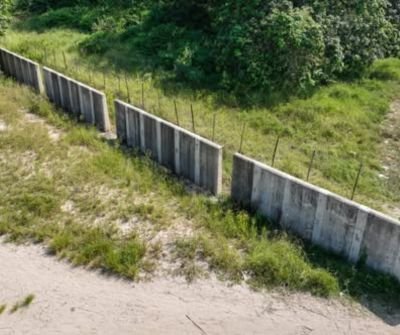
A Special Tribunal has set aside an R85 million KwaZulu-Natal border wall tender after the Special Investigating Unit (SIU) uncovered fraud, non-compliance, and incomplete construction along the South Africa–Mozambique border.
The project, meant to reduce cross-border vehicle theft and smuggling, was only partially completed despite almost full payment being made.
The ruling now clears the way for the government to recover public funds and possibly pursue criminal charges linked to the failed infrastructure project.
KwaZulu-Natal Border Wall Tender Scandal and Mozambican Cross-Border Crime Concerns
The KwaZulu-Natal Department of Transport launched the border wall project as part of efforts to curb rising cross-border crime between South Africa and Mozambique. Communities in northern KwaZulu-Natal had long reported increasing incidents of stolen and hijacked vehicles being moved across the border with relative ease.
The planned 8-kilometre concrete barrier was intended to act as a physical deterrent in areas identified as high-risk for vehicle smuggling syndicates. The government framed the project as part of a broader border security infrastructure aimed at strengthening law enforcement capacity in rural border regions.
The tender, valued at approximately R85 million, was awarded to ISF Shula Joint Venture. However, what was presented as a border security solution has now become one of the most closely scrutinised procurement cases involving infrastructure fraud and incomplete delivery in recent years.
SIU Investigation Into KZN Government Tender Fraud and Procurement Irregularities
The Special Investigating Unit launched its investigation under a presidential proclamation covering procurement activities within the KwaZulu-Natal Department of Transport between 2016 and 2021.
The investigation focused on allegations of the irregular awarding of government tenders, false documentation in procurement submissions, and failure to comply with public-sector supply chain regulations.
The Special Investigating Unit found multiple procurement irregularities in the awarding of the KwaZulu-Natal border wall tender, including the use of fraudulent compliance documents during the bidding process.
Key findings included:
- Fraudulent BBBEE certificate submitted to secure the tender
- Expired Letter of Good Standing used in procurement documentation
- Failure to meet financial capacity requirements for infrastructure delivery
- Non-compliance with mandatory tender conditions under government procurement rules
These findings raised serious concerns about the integrity of the tender process and whether proper due diligence was followed before awarding a high-value public infrastructure contract.
Special Tribunal Ruling on R85 Million Border Wall Contract Cancellation
The Special Tribunal ruled in favour of the SIU and officially set aside the R85 million border wall tender awarded to ISF Shula Joint Venture.
In its judgment, the Tribunal reinforced the legal requirement that all government procurement processes must be fair, transparent, competitive, and cost-effective. It found that the irregularities identified by the SIU were significant enough to invalidate the entire contract.
The Tribunal also considered the physical state of the project, confirming that only 5.29 kilometres of the planned 8-kilometre border wall had been completed. This left a substantial portion of the KwaZulu-Natal–Mozambique border unprotected, despite large financial payments already made.
Because of the incomplete construction, the government was forced to initiate a new procurement process estimated at an additional R62 million to complete the border security wall project.
This effectively means taxpayers are now funding the same infrastructure twice due to tender failure and procurement irregularities.
Fraudulent BBBEE Certificate and Non-Compliance in Government Infrastructure Tender
One of the most serious findings in the SIU investigation was the use of a fraudulent BBBEE certificate to secure the KwaZulu-Natal border wall contract.
BBBEE compliance is a key requirement in South African government tenders, particularly for large infrastructure projects. The SIU found that the documentation submitted by the Joint Venture did not meet legal procurement standards.
In addition to the fraudulent certificate, the investigation also revealed an expired Letter of Good Standing and failure to meet financial capacity requirements necessary for a project of this scale.
These compliance failures highlight ongoing concerns about weak verification processes in government infrastructure procurement and the risk of fraud in high-value public tenders.
Incomplete Border Wall Construction Along the South Africa–Mozambique Border
The physical outcome of the project has also drawn significant attention. According to the SIU, only 5.29 kilometres of the planned 8-kilometre border wall were constructed.
The incomplete KwaZulu-Natal border wall has left a gap in the intended border security infrastructure, undermining the original objective of reducing vehicle theft, smuggling, and illegal cross-border movement.
Despite the incomplete work, the Joint Venture had already received approximately R84 million in payments from the state.
This mismatch between payment and delivery formed a central part of the SIU case presented to the Special Tribunal.
SIU Action to Recover Public Funds and Government Tender Fraud Consequences
Following the Tribunal ruling, the SIU has confirmed that it will move to recover all funds linked to the KwaZulu-Natal border wall tender.
The Tribunal ordered that the Joint Venture must repay any profits derived from the contract. An independent expert will be appointed to determine the exact amount, after which the SIU may accept or challenge the findings.
If disputes arise, the matter may be referred back to the Special Tribunal for further determination.
The SIU has also confirmed that evidence of potential criminal conduct will be referred to the National Prosecuting Authority (NPA) for further investigation, which could lead to criminal charges related to fraud, misrepresentation, or corruption in government procurement.
The unit is also authorised to pursue civil recovery proceedings to ensure that public funds lost through irregular procurement are returned to the state.
Public Reaction to Border Security Failures and Government Spending Waste
The ruling has reignited public debate about infrastructure spending, border security, and accountability in government tender processes.
The KwaZulu-Natal border wall was originally intended to address community concerns about cross-border crime and vehicle theft syndicates operating between South Africa and Mozambique.
However, the exposure of fraud and incomplete construction has raised concerns about how large-scale public infrastructure projects are managed and monitored.
For many communities along the border, the case reflects a broader frustration with delayed service delivery and repeated reports of government tender irregularities.
The fact that additional funds are now required to complete the project has also intensified scrutiny over procurement oversight and value for money in public infrastructure development.
What Happens Next in the KwaZulu-Natal Border Wall Tender Case
The SIU will now focus on recovering financial losses from the Joint Venture and ensuring compliance with the Tribunal’s ruling.
An independent valuation of profits will be conducted, after which further legal steps may follow depending on whether parties accept or dispute the findings.
At the same time, the SIU is preparing to hand over possible criminal evidence to the NPA, which may lead to further legal proceedings.
The KwaZulu-Natal Department of Transport is expected to restart processes to complete the remaining section of the border wall, although the financial and legal implications of the case may influence how future infrastructure tenders are awarded and monitored.
Conclusion: SIU Border Wall Fraud Case Highlights Government Tender Risks in South Africa
The Special Tribunal ruling on the KwaZulu-Natal border wall tender highlights ongoing risks in government procurement processes, particularly in large infrastructure projects linked to border security.
With allegations of fraud, incomplete construction, and significant financial losses, the case underscores the importance of stricter oversight in public tenders and stronger enforcement of procurement regulations.
As the SIU continues its recovery efforts, the case stands as a key example of how tender fraud and non-compliance can directly impact public infrastructure delivery and national security priorities.



One Comment
Comments are closed.