
Multi-agency wildlife operation nets three suspects in Polokwane
A coordinated wildlife crime operation in Polokwane has led to the arrest of three men accused of illegally possessing protected wildlife species.
Police say the suspects were caught in separate incidents during an operation targeting wildlife trafficking and the illegal trade in protected animals.
The men appeared before the Polokwane Magistrate’s Court on Wednesday, where they were granted bail as investigations continue.
Wildlife trafficking arrests in Polokwane linked to protected species trade
The arrests took place on 4 March during a coordinated operation led by the Stock Theft and Endangered Species (STES) Unit of the South African Police Service, working alongside the Limpopo Department of Economic Development, Environment and Tourism, and the Limpopo Pangolin Collective.
Authorities say the operation targeted individuals suspected of trafficking protected wildlife and possessing animal parts without the permits required under South African environmental laws.
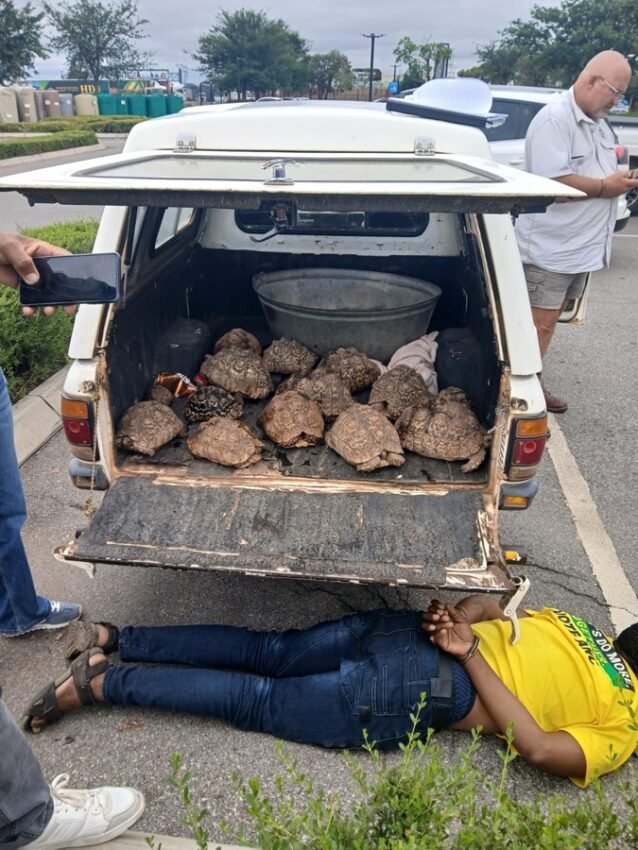
In the first incident, police stopped a vehicle near the area of Makro Polokwane. Inside the vehicle, officers reportedly discovered 14 protected Leopard Tortoise.
The tortoises were allegedly being transported without permits. Police arrested two suspects at the scene, identified as Obed Makoena, 36, and Thabang Kgaphola, 34.
Leopard tortoises are among the species protected under South African conservation regulations. Authorities say illegal trade in tortoises has increased in recent years, driven by demand in the exotic pet market.
Police confirm second arrest for lion and leopard skins in Sterpark
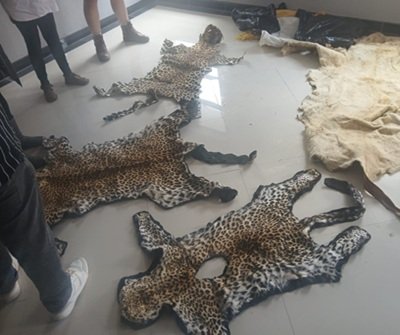
In a separate operation conducted in the Sterpark area of Polokwane, police arrested a third suspect after allegedly finding him in possession of protected animal skins.
According to investigators, officers discovered three leopard skins and one skin from a Lion. The suspect, Aubrey Mokalapa, 32, was arrested after failing to produce permits authorizing possession of the animal parts.
Wildlife skins from species such as lions and leopards are often targeted by trafficking networks due to their high value on illegal markets.
Police say the seizures form part of broader efforts to combat wildlife trafficking in the province.
Lieutenant General Thembi Hadebe, Limpopo’s provincial police commissioner, praised the joint operation.
“This success highlights the importance of collaboration between law enforcement and environmental authorities in protecting our country’s natural heritage,” she said.
Court appearance and bail granted for Polokwane wildlife suspects
All three suspects appeared in the Polokwane Magistrate’s Court on Wednesday, 11 March.
During the brief court proceedings, the accused were each granted bail of R10,000. The case has been postponed to allow investigators time to complete further inquiries and gather additional evidence.
Prosecutors are expected to continue building the case, which could include charges under environmental protection legislation related to the illegal possession and transportation of protected species.
Authorities say further arrests are possible as investigations continue.
Wildlife crime in South Africa and why protected species matter
Wildlife crime remains a major concern across South Africa, where trafficking networks often target endangered or protected species for profit.
Animals such as tortoises, reptiles, and big cats are frequently smuggled for the exotic pet trade or for their skins and body parts.
Conservation groups warn that illegal wildlife trafficking threatens biodiversity and undermines decades of conservation work.
Environmental experts say public awareness plays an important role in preventing these crimes.
Members of the public are encouraged to report suspicious activities involving wildlife, including the illegal sale, transport, or possession of protected species.
Authorities stress that protected wildlife may not be captured, sold, transported, or kept without the proper permits issued by environmental authorities.
Anyone with information about wildlife trafficking can contact police or environmental enforcement agencies.
What happens next in the wildlife trafficking investigation
The investigation remains ongoing as authorities continue to examine the origins of the animals and the possible networks behind the illegal trade.
Police say operations targeting wildlife trafficking will continue across Limpopo and other provinces.
Officials believe stronger collaboration between law enforcement, conservation agencies, and community partners will be key in protecting South Africa’s wildlife.
For now, the three suspects remain out on bail while the case proceeds through the court system.
Bruce Mhlongo Court Update: Njoms Security Owner Appears Today in Pietermaritzburg Murder Case






2 Comments
Comments are closed.